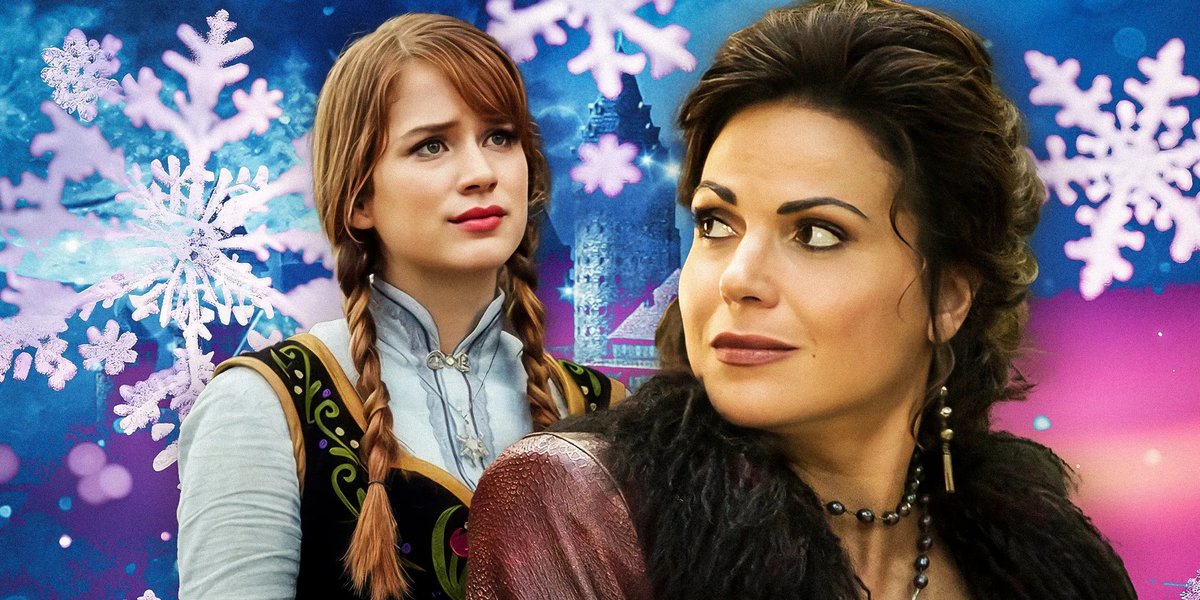
When Once Upon a Time first enchanted audiences, it wasn't just another fairy tale adaptation; it was a masterclass in reinterpretation, sparking countless Once Upon a Time Season 7 Fan Theories & Discussions from a dedicated community eager to unravel its intricate tapestry. While the show experienced its share of ups and downs, particularly in later seasons, the decision to launch Season 7 as a bold "requel"—half reboot, half sequel—ignited a fresh wave of speculation, debate, and, ultimately, a surprisingly satisfying conclusion that many fans felt redeemed the series' latter half.
This wasn't just about guessing who Hook's father might be or if Red Riding Hood had a secret sibling (though those were certainly part of the fun in earlier years). Season 7's unique premise challenged viewers to reconsider what Once Upon a Time could be, generating a new set of fan theories around its revamped mythology, fresh villains, and the return of beloved characters in unexpected roles.
At a Glance: Season 7's Surprising Revival
- A Bold Requel: Season 7 wasn't just a new season; it was a conscious reboot, aiming to refresh the series while honoring its past.
- Back to Original Form: The season successfully steered away from direct Disney IP reliance, returning to the nuanced, original fairy tale twists of its early success.
- Compelling New Villains: Lady Tremaine and Mother Gothel were reimagined with complex, dark backstories that felt fresh and intriguing.
- Fulfilling Finale: Despite lasting only one season, the finale provided a more poetic and conclusive end for the entire series than the previous Season 6 attempt.
- Legacy Strengthened: Season 7, often unfairly maligned, played a crucial role in cementing Once Upon a Time's overall narrative and character arcs.
The Unpopular Truth About Once Upon a Time's Later Seasons (Before Season 7)
To truly appreciate the fan theories and discussions surrounding Once Upon a Time Season 7, we first need to understand the show's journey. From its enchanting premiere in 2011/2012, OUAT captivated millions with its unique premise: beloved fairy tale characters living in our world, stripped of their memories, thanks to a powerful curse. Viewers quickly became armchair detectives, crafting elaborate theories about character origins, hidden connections, and future plot twists.
Some fan theories, like the true identity of the Wicked Witch (Zelena as Rumpelstiltskin and Cora's daughter), even proved to be true on the show, fueling the community's passion. Others speculated wildly, from Prince Eric as Hook's father to Jefferson (Mad Hatter) being a Time Lord, or the Hocus Pocus Witches being part of the Coven of Eight. This deep engagement was a hallmark of the OUAT fandom.
However, after a strong initial run, viewership began to decline significantly from Season 4 onwards. A major contributing factor was the show's increasing reliance on direct Disney intellectual property. What started as original, nuanced interpretations (think Belle or Aurora in the early seasons) shifted to almost direct character lifts, exemplified by the Frozen arc in Season 4. This change, while initially exciting for some, diluted the show's original magic, which lay in its ability to twist familiar tales into something entirely new and unexpected. The narrative felt less organic, and the stakes less personal.
A "Requel" Rises: Why Season 7 Was a Bold Bet
Faced with declining ratings and a sense that the story had perhaps run its course with its original protagonist, Emma Swan, creators Edward Kitsis and Adam Horowitz made a bold decision: Season 7 would be a "requel." This innovative concept aimed to be half reboot, half sequel—a fresh start that acknowledged the past but forged a new path.
The most noticeable change was the cast. Only Colin O’Donoghue (Hook), Robert Carlyle (Rumpelstiltskin), and Lana Parilla (Regina) returned as main cast members, ushering in a new generation of characters, most notably a grown-up Henry Mills and his daughter, Lucy. This move was controversial, alienating some long-time fans who missed the original ensemble. However, it also created an opportunity for fresh fan theories. How would the remaining core characters fit into this new narrative? What new roles would they play in a story centered around Henry? These were central to the early Once Upon a Time Season 7 Fan Theories & Discussions.
This decision, though risky, allowed the show to break free from the narrative constraints and character arcs that had become stale. It was a chance to revisit the show's core premise with a renewed sense of purpose, moving beyond the familiar Storybrooke setting to a new cursed realm, Hyperion Heights.
Back to Basics: How Season 7 Reclaimed OUAT's Original Magic
Despite its initial reception, which often mislabeled it as the "worst" season, Season 7 successfully brought Once Upon a Time back to its original strengths. The shift away from direct Disney IP was palpable and refreshing. Instead of straightforward adaptations, the season reintroduced the kind of nuanced, original fairy tale characters that made the early seasons so compelling.
Remember the thrill of discovering Regina's complex redemption arc or the shocking twist of Red Riding Hood being the Big Bad Wolf? Season 7 echoed this by taking familiar archetypes and imbuing them with dynamic new backstories and motivations. This was crucial for sparking renewed Once Upon a Time Season 7 Fan Theories & Discussions. Fans were no longer just guessing which Disney movie character would appear next; they were speculating about the new identities and hidden depths of classic fairy tale figures, much like in the show's heyday.
This return to original interpretations allowed for greater creative freedom and more compelling storytelling, a key element that had been diluted in the post-Season 3 era. It was less about ticking off a list of characters and more about weaving an intricate, character-driven narrative. For a deeper dive into the season's structure and overall impact, check out our Once Upon a Time Season 7 guide.
Unpacking the New Lore: Fan Theories Around Season 7's Fresh Faces
Season 7's new cast and cursed setting opened up a Pandora's Box of fresh fan theories, moving beyond the legacy questions to focus on the mysteries of Hyperion Heights and its inhabitants.
Lady Tremaine's Dark Secret: A Murderous Rapunzel?
Perhaps the most compelling new villain was Lady Tremaine, portrayed by Gabrielle Anwar. Far from being a mere wicked stepmother, this version was reimagined as a murderous Rapunzel, a victim herself, whose dark past fueled her vindictive present. This twist was a prime example of Season 7's return to form, transforming a universally recognized villain into a layered character with a tragic, complex history.
Fan theories quickly emerged around her motivations and connections. How did she become so powerful? What was the true extent of her past trauma? The revelation that she was Rapunzel, suffering from an immense loss, sparked discussions about the nature of villainy itself in the OUAT universe, echoing the complexities of Regina's early characterization. It reminded viewers that even the most evil characters often had a heartbreaking origin story.
Mother Gothel's Twisted Plans: A Powerful, Vengeful Witch
Emma Booth's portrayal of Mother Gothel was another standout. While a loose adaptation of the classic Rapunzel antagonist, this Gothel was a powerful, ancient witch bent on a terrifying revenge. Her character introduced a new layer of magical mythology, connecting to a larger Coven of Eight and hinting at an even older, darker magical history.
Theories swirled around Gothel's true age, her full magical capabilities, and her ultimate goal. Was she purely evil, or was there a deeper, more sympathetic motive behind her quest for revenge against humanity? Her ability to manipulate and her deep-seated resentment made her a formidable and unpredictable force, generating intense discussion about her place in the larger OUAT magical hierarchy. Fans speculated about her connections to other powerful magic-users from previous seasons, trying to fit her into the existing lore while embracing her new, terrifying autonomy.
New Mythology, New Theories
With these new, nuanced villains and a completely new cursed landscape, fan theories in Season 7 shifted focus. Instead of connecting characters to existing Disney IP, discussions centered on:
- The nature of the new curse: How did it work differently than Regina's original?
- The magic of Hyperion Heights: What were its unique properties and limitations?
- The true identities of background characters: Who else was hiding a fairy tale past in this new cursed city?
- The impact of the new realms: How did this new realm, and Gothel's ancient Coven, connect to the established Ever After, Wish Realm, and other dimensions?
This return to mystery and original storytelling was a breath of fresh air, proving that Once Upon a Time could still spark genuine wonder and speculation when it leaned into its strengths.
Henry Mills, All Grown Up: A New Hero, A Familiar Journey
At the heart of Season 7 was a grown-up Henry Mills, now a father and a novelist, embarking on his own adventure to find his family and break a new curse. This decision to center the story on Henry, the original "believer" and the catalyst for the first curse's undoing, provided a poignant full-circle moment for the series.
Fan theories around Henry were abundant. How would his life path differ from Emma's? Would he possess magic like his mother and grandmother? What kind of hero would he become without the guiding hand of the Savior? His journey brought a fresh twist to the show's mythology, showing that the fight between good and evil, belief and cynicism, was a generational struggle. His relationship with his daughter, Lucy, mirrored his own childhood quest, providing both nostalgia and a new emotional core for the series. Discussions often revolved around whether he would truly embrace his role as a magical guardian or find a more grounded path, proving to be a different kind of hero.
The Unsung Hero: Regina's Poetic Full Circle
Among the returning core cast, Lana Parilla's Regina Mills truly shone in Season 7. Her character, having gone from the Evil Queen to a complex hero, completed a powerful and incredibly satisfying journey. In Hyperion Heights, she was Roni, a bar owner, who eventually embraced her destiny as "The Good Queen."
The Season 7 finale, often overlooked due to the season's overall reception, provided a far more fulfilling and poetic ending to Once Upon a Time than the original Season 6 finale. While Season 6's "Final Battle" with the Black Fairy felt flat and lacked genuine consequence, Season 7 culminated with Regina casting a final, powerful curse. This wasn't a curse of vengeance, but one of unity: it merged all the realms into a single Storybrooke, creating a world where every character could live happily ever after, together.
This was a deeply cathartic moment, celebrated by fans who had followed Regina's arduous path to redemption. Fan theories prior to the finale often speculated on what Regina's ultimate purpose would be. Would she sacrifice herself? Would she finally find her own happy ending? The actual outcome, where she became the unifying force, "The Good Queen" to all realms, resonated deeply. It was a testament to her growth and cemented her status as one of the show's most beloved characters.
Moreover, Rumple's cathartic death, finally at peace and reunited with Belle, provided closure for another foundational character. His final act, saving Hook (the Wish Realm version), perfectly tied into his complex moral journey. These poignant character conclusions solidified Season 7's legacy, offering a thoughtful conclusion that the series deserved.
Beyond the "Worst Season" Label: Debunking Misconceptions and Celebrating Its Legacy
The label "worst season" is often hastily applied to Once Upon a Time Season 7, largely due to its significant cast changes and perceived departure from the original story. However, this perspective overlooks the season's genuine strengths and its crucial role in strengthening the show's overall legacy.
Season 7 wasn't a failure; it was a necessary reinvention. It bravely tackled the show's growing creative fatigue by:
- Reasserting originality: Moving away from reliance on direct Disney IP, it rediscovered the magic of reinterpreting classic tales.
- Offering a definitive end: The finale provided a far more coherent and emotionally resonant conclusion than the Season 6 "final battle," giving characters like Regina and Rumple truly satisfying goodbyes.
- Exploring new themes: It delved into generational heroism with Henry and the enduring power of family, even in fractured circumstances.
While it's understandable that some fans missed the original ensemble, to dismiss Season 7 entirely is to miss a season that, against considerable odds, managed to rekindle the imaginative spark that made Once Upon a Time special. It proved that the spirit of the show—the idea that fairy tales could be twisted, dark, and deeply human—was stronger than any single character or specific Storybrooke curse.
What Once Upon a Time Season 7 Taught Us About Fandom and Reinvention
The journey of Once Upon a Time Season 7, from its controversial inception to its surprisingly satisfying conclusion, offers valuable lessons about the dynamics of fandom, the challenges of creative reinvention, and the enduring power of storytelling. The depth of Once Upon a Time Season 7 Fan Theories & Discussions throughout its run underscores the passionate connection viewers forge with complex narratives and characters.
It taught us that:
- Fandom is resilient: Even when faced with drastic changes, a dedicated fanbase will continue to engage, theorize, and debate, shaping the narrative conversation.
- Reinvention is risky but rewarding: While a reboot or "requel" can alienate some, it can also inject new life into a beloved franchise, allowing it to evolve and find a fresh voice.
- A strong ending matters: Ultimately, a well-crafted conclusion can elevate an entire series, providing closure and solidifying its place in pop culture history.
So, whether you were an ardent supporter or a skeptical observer, it's worth revisiting Season 7 with an open mind. You might just find that this often-misunderstood chapter was the true magic mirror, reflecting the best of what Once Upon a Time had to offer.