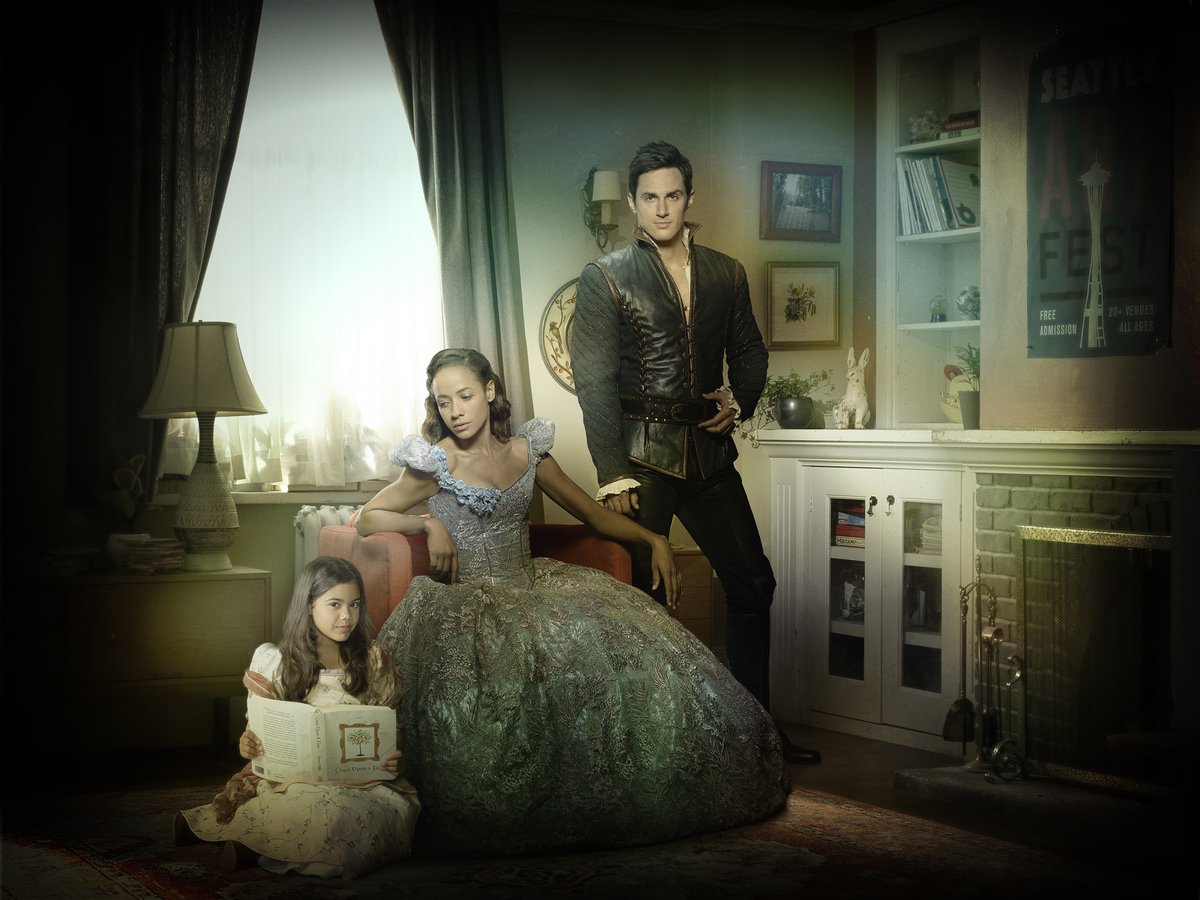
Once upon a Time Season 7 Reviews: Reconsidering Its Legacy
For many Once Upon a Time fans, the mention of Season 7 often conjures a mix of confusion, frustration, and perhaps a touch of longing for what once was. Yet, nearly a decade after its initial run, a quiet but growing chorus suggests that the final chapter, despite its rocky reception, might actually be the show's most creatively daring and narratively satisfying. Far from being an easily dismissed afterthought, a closer look at Once Upon a Time Season 7 reviews & viewer reception reveals a complex legacy that deserves a fresh perspective.
At its peak, Once Upon a Time captivated millions with its whimsical premise: beloved fairy tale characters living among us, stripped of their memories by a powerful curse. But as the seasons wore on, the magic began to wane, and by the time Season 6 wrapped, the show's future felt uncertain. What followed was a bold, some might say audacious, attempt to reinvent itself. This isn't just a story about a TV show's final season; it's a fascinating case study in how a series can attempt to redefine its own mythology and deliver a surprising, if belated, redemption.
At a Glance: Understanding Once Upon a Time Season 7
- A "Requel" Not a Reboot: Creators pitched it as half-reboot, half-sequel, retaining core characters while introducing a largely new cast and setting.
- Core Cast Departure: Most original main actors exited, leaving only Colin O’Donoghue (Hook), Robert Carlyle (Rumplestiltskin), and Lana Parilla (Regina) as series regulars.
- Return to Roots: Shifted away from direct Disney intellectual property (IP) tie-ins, focusing on reimagining classic fairy tales with original twists.
- New Narrative Hook: Centered on an adult Henry Mills (Andrew J. West) under a new curse in Seattle's Hyperion Heights.
- Critical Divides: While some critics found it a refreshing change of pace, many long-time viewers struggled with the drastic cast and story overhaul.
- Ratings Decline: Despite creative efforts, continued to suffer from low viewership and a tough new timeslot, leading to its cancellation after one season.
- A Satisfying Finale: Offered a more conclusive and emotionally impactful series ending than the originally planned Season 6 finale, often cited as a redeeming factor.
The Genesis of a Requel: Why Season 7 Had to Be Different
When Once Upon a Time first premiered in October 2011, it was an immediate sensation. For the first three and a half seasons, its unique blend of fairy tale lore, modern-day drama, and compelling characters like Emma Swan (Jennifer Morrison) kept ratings high. But from Season 4 onward, a subtle shift began to alienate some of its audience. The show, which initially excelled at crafting its own inventive twists on traditional tales, started incorporating more direct Disney IP, notably Frozen. This move, while perhaps designed to attract new viewers, felt to many like a deviation from its original spirit. Viewership steadily declined, hitting all-time lows by Season 6.
Faced with dwindling numbers and the departure of most of its beloved main cast—including Jennifer Morrison, Ginnifer Goodwin, and Josh Dallas—creators Edward Kitsis and Adam Horowitz made a bold choice: a "requel." This wasn't a full reboot that erased everything, nor a simple continuation. It was an attempt to honor the show's history while carving a fresh path forward. Imagine trying to renovate your childhood home; you keep the foundation but change the layout and design to suit a new era. That's the essence of Season 7.
A Bold New World (and Cast) for Storybrooke
The most noticeable change in Season 7 was undoubtedly the cast. Gone were the familiar faces of Snow White, Prince Charming, and Emma Swan. In their place, a new ensemble emerged, orbiting around a trio of returning fan favorites:
- Colin O’Donoghue as Killian "Hook" Jones (and Rogers): Still the dashing pirate, but with a new cursed identity as a police detective in Hyperion Heights. His journey was less about romance with Emma and more about finding a deeper purpose and connection to his daughter, Alice.
- Robert Carlyle as Rumplestiltskin (and Weaver): The Dark One, ever manipulative but endlessly complex, also found himself under the new curse as a corrupt detective, Weaver. His struggle to reunite with Belle and achieve a true happy ending continued, taking a darker, more poignant turn.
- Lana Parilla as Regina Mills (and Roni): The Evil Queen, now a beloved figure, embraced a new role as Roni, a bar owner. Her arc in Season 7 was arguably her most resonant, culminating in a powerful redefinition of her own legacy.
These returning stars provided a crucial bridge to the past, grounding the new stories in the established mythology. They were joined by a fresh cast, including Andrew J. West as a grown-up Henry Mills, Dania Ramirez as a new Cinderella (Jacinda), Gabrielle Anwar as Lady Tremaine, and Emma Booth as Mother Gothel. This injection of new blood aimed to breathe fresh life into the show, offering new perspectives and conflicts without entirely abandoning its roots.
Recapturing the Magic: A Return to Roots
One of the most significant criticisms leveled against Once Upon a Time in its later original seasons was its increasing reliance on direct Disney IP. While early seasons brilliantly reimagined classic tales, later seasons, particularly Season 4 with Frozen, began to feel less like original fairy tale adaptations and more like live-action promotional material for Disney's animated films. This often felt creatively limiting and, for many, diluted the show's unique charm.
Season 7 largely corrected this course. It returned to the show's original ethos of twisting and reimagining traditional fairy tales, making them entirely its own. We saw:
- Lady Tremaine as Rapunzel: A brilliant twist that reframed the classic villain not just as Cinderella's cruel stepmother, but as a complex character with her own tragic past, a victim of Mother Gothel's machinations.
- Mother Gothel: Reimagined as a powerful, ancient witch and the true antagonist, far from the somewhat campy villain of Disney's Tangled. Her portrayal was darker, more formidable, and deeply tied to the season's central mystery.
- A New Cinderella: Not the one from Storybrooke, but a fresh take on the character (Jacinda) living in a parallel realm, facing modern-day struggles while still embodying the spirit of hope and resilience.
This approach allowed the writers to reclaim the creative freedom that characterized the show's best seasons. It felt less like a constraint and more like an open canvas, breathing fresh air into the narrative possibilities and allowing for genuinely surprising character developments.
The Story's Heartbeat: Henry's Journey, Reimagined
At the core of the original Once Upon a Time was Henry Mills, the "believer" who brought Emma Swan to Storybrooke to break the curse. Season 7 brilliantly twisted this mythology, placing a grown-up Henry (Andrew J. West) at its center. Years after leaving Storybrooke, Henry finds himself in a new enchanted forest, falls in love with Cinderella (Jacinda), and has a daughter, Lucy. When a new curse strikes, they all end up in Seattle's Hyperion Heights, stripped of their memories.
Lucy, mirroring young Henry from the pilot, becomes the new "believer," convinced her father and the residents of Hyperion Heights are cursed fairy tale characters. The premise was: "Henry locates his birth mother, believing she can save Storybrooke, a town of fairy tale characters who have lost their memories in a parallel world." This flip-flop was a clever meta-narrative, allowing the show to revisit its core themes of belief, family, and the power of stories from a fresh perspective. The cursed reality of Hyperion Heights, with its gritty, urban aesthetic, provided a stark contrast to the cozy charm of Storybrooke, adding another layer of intrigue to the unfolding mystery.
Critical Reception: A Divided Kingdom
The critical response to Once Upon a Time Season 7 was, predictably, mixed. Many critics acknowledged the creative risks taken by the showrunners. Some praised the daring "requel" approach, seeing it as a necessary shot in the arm. They appreciated the show's attempt to rejuvenate itself, to move past the increasingly convoluted plots of earlier seasons, and to return to a more focused, character-driven narrative. The return to original fairy tale reimaginings was often highlighted as a positive.
However, a significant portion of critics found the transition jarring. The absence of beloved characters like Emma, Snow, and Charming was a hurdle many couldn't overcome. The new cursed setting, Hyperion Heights, sometimes felt less magical and more generic than Storybrooke. While the acting of the returning trio—Parilla, O’Donoghue, and Carlyle—was consistently lauded, the new cast sometimes struggled to fill the very large shoes left behind. The early episodes, in particular, faced an uphill battle convincing both critics and viewers that this new vision was worthwhile.
Viewer Reception: The Fandom's Verdict
For long-time viewers, the reception was even more passionate and polarized. For many, Season 7 felt like a betrayal. The show they loved, with its ensemble cast and intricate web of relationships, was gone. The emotional investment in characters like Emma Swan, who was the very "savior" of the series, was too strong to easily transfer to a new protagonist, even if that protagonist was Henry. This segment of the audience often labeled Season 7 as the "worst" season, refusing to engage with its new direction.
Yet, a smaller, but vocal, contingent of viewers found themselves pleasantly surprised. For those who were feeling fatigue from the escalating stakes and convoluted lore of Seasons 5 and 6, Season 7 offered a refreshing reset. They appreciated the focus on new stories, the darker tone, and the opportunity to see familiar characters like Regina, Hook, and Rumple explore new facets of their identities. These viewers often championed Season 7 as creatively superior to its immediate predecessors, arguing that its tighter storytelling and more mature themes marked a significant improvement.
The overall sentiment, however, leaned towards disappointment in terms of raw viewership numbers. The new Friday night timeslot, combined with the drastic changes, meant that the show continued to reach all-time lows in ratings, ultimately leading to its cancellation after just 22 episodes. This commercial failure often overshadowed the creative merits that some saw in the season.
Navigating the New Narrative: Hyperion Heights Unveiled
Season 7 meticulously built its new world, episode by episode. The central premise, as detailed in "Hyperion Heights" (Episode 1), saw an adult Henry encountering Cinderella in another realm, leading to Lucy's quest to make her cursed father remember his true self in Seattle. The season then unfolded a complex narrative web:
- The Struggle for Memory: Much like early OUAT, characters grappled with their cursed identities. "A Pirate's Life" (Episode 2) had Henry seeking family help, while "Beauty" (Episode 4) focused on Tilly (Alice) helping Weaver (Rumple) remember.
- Villains and Their Victims: Lady Tremaine (Gabrielle Anwar) was a formidable foe, with "One Little Tear" (Episode 9) revealing her desperate deal with Weaver to wake Anastasia. Mother Gothel (Emma Booth) emerged as the season's true overarching antagonist, her backstory explored in "Flower Child" (Episode 19), which showcased her quest for revenge.
- New Relationships and Old Bonds: Roni (Regina) made "a shocking discovery" in "Greenbacks" (Episode 5), eventually leading to her realizing Drizella was her sister. Hook's pursuit of Eloise Gardener (Episode 7) connected him to his daughter, Alice. The blossoming romance between Henry and Jacinda (Cinderella) formed the new heart of the show.
- The Final Battle: The season steadily built towards a confrontation with Gothel and the forces of the Wish Realm, culminating in Wish Rumple's plot in "Homecoming" (Episode 21) to stop Weaver from destroying his powers.
This season wasn't just a collection of new stories; it was an exploration of how trauma, regret, and the search for identity persist across different realms and curses. The deeper dives into characters like Lady Tremaine (revealed to be Rapunzel and a victim of Gothel) showcased the show's return to its roots of complex villain origins. For those willing to invest, there was a rich tapestry of new lore and character development to uncover. Explore Once Upon a Time Season 7 to delve deeper into these intricate storylines and character arcs.
The Finale's Farewell: A Consequential Conclusion
One of the most compelling arguments for re-evaluating Season 7 lies in its series finale, "Leaving Storybrooke." Many fans and critics agree that it provided a more cathartic and fitting end for the entire Once Upon a Time saga than the original Season 6 finale.
The Season 6 "Final Battle," involving Emma and the Black Fairy, felt largely consequence-free. All main characters survived, and the resolution, while happy, lacked the emotional punch and definitive closure that many hoped for. It felt more like a season finale designed to lead into another season, rather than a final goodbye.
In stark contrast, Season 7 delivered a finale with real stakes. It featured a battle threatening all realms, forcing characters to make ultimate sacrifices. Notably, Rumple met a definitive, yet heroic, end, finally achieving his true happy ending by sacrificing himself to save others and be reunited with Belle in the afterlife. This moment, years in the making for his character, provided a deeply satisfying resolution to his complex journey.
The culmination saw Regina casting a final, powerful curse that united all the realms into Storybrooke. In a beautiful full-circle moment, she was then elected "The Good Queen," not by birthright or force, but by the will of all the people she had touched and saved. This wasn't just a happy ending; it was a earned, consequential, and emotionally resonant conclusion that redefined her legacy and, by extension, the entire show's message. It left the possibility for future stories open, yet firmly closed the current chapter with a sense of completion.
Beyond the Ratings: The Underrated Legacy of Season 7
While ratings and initial viewer reaction painted Season 7 as a commercial failure, its creative legacy deserves a re-evaluation. It was a season born of necessity, forced to innovate and take risks in the face of insurmountable odds. Here's why it might be more important than you remember:
- Creative Courage: In an era of safe reboots and endless continuations, Once Upon a Time dared to reinvent itself, not just with a new cast, but with a fundamental shift in its narrative approach. This kind of courage is rare in network television.
- Narrative Refinement: By focusing on a smaller core cast and a fresh set of fairy tales, the storytelling felt tighter and more focused. The overarching mystery of Hyperion Heights and Mother Gothel allowed for a more coherent season-long arc.
- Character Evolution: For Regina, Rumple, and Hook, Season 7 offered rich new layers of character development. Regina's journey to "The Good Queen" felt earned. Rumple's ultimate sacrifice provided a fitting culmination to his centuries-long struggle between light and darkness. Hook's emotional connection to Alice added profound depth.
- A True Farewell: Despite its cancellation, Season 7 managed to craft a series finale that genuinely resonated. It tied up loose ends, provided meaningful closure for its longest-running characters, and left viewers with a sense of hope and satisfaction, something many long-running shows fail to achieve.
Imagine a painter who starts a grand, intricate mural. Over time, some of their colors run out, and parts of the wall crumble. Instead of abandoning the project, they decide to use new colors and techniques to finish the mural, creating a new, compelling section that, in hindsight, might be seen as some of their most innovative work, even if it wasn't the original vision. That's Season 7.
Why Revisit Hyperion Heights Now?
If you were among the viewers who dropped off during Once Upon a Time's later seasons, or if you dismissed Season 7 outright due to the cast changes, now might be the perfect time to give it another chance. With the benefit of hindsight and removed from the weekly pressures of live viewership, the season's strengths truly shine.
- See the Full Picture: Without the anticipation of what came next, you can appreciate the narrative build-up and the clever twists on classic tales.
- Focus on the Core: The tighter focus on Regina, Rumple, and Hook allows for a deeper appreciation of their final character arcs.
- Experience the Closure: The series finale truly is a standout, providing a sense of completion that many long-time fans craved.
- Appreciate the Risk: In an age of safe bets, Once Upon a Time Season 7 was a genuine creative gamble. Appreciating that effort, regardless of its commercial outcome, offers valuable insight into storytelling under pressure.
Ultimately, Once Upon a Time Season 7 is a testament to resilience and reinvention. While it may not have been the ending everyone expected, it delivered a surprisingly mature, emotionally resonant, and creatively vibrant conclusion to a beloved fairy tale saga. Its legacy is not just one of declining ratings, but of a bold attempt to redefine itself, leaving behind a finale that, for many, redeemed the journey and cemented the show's place in the pantheon of imaginative television.